

From the Camera to the Classroom: My Beginnings as a Producer and the Path Toward Teaching
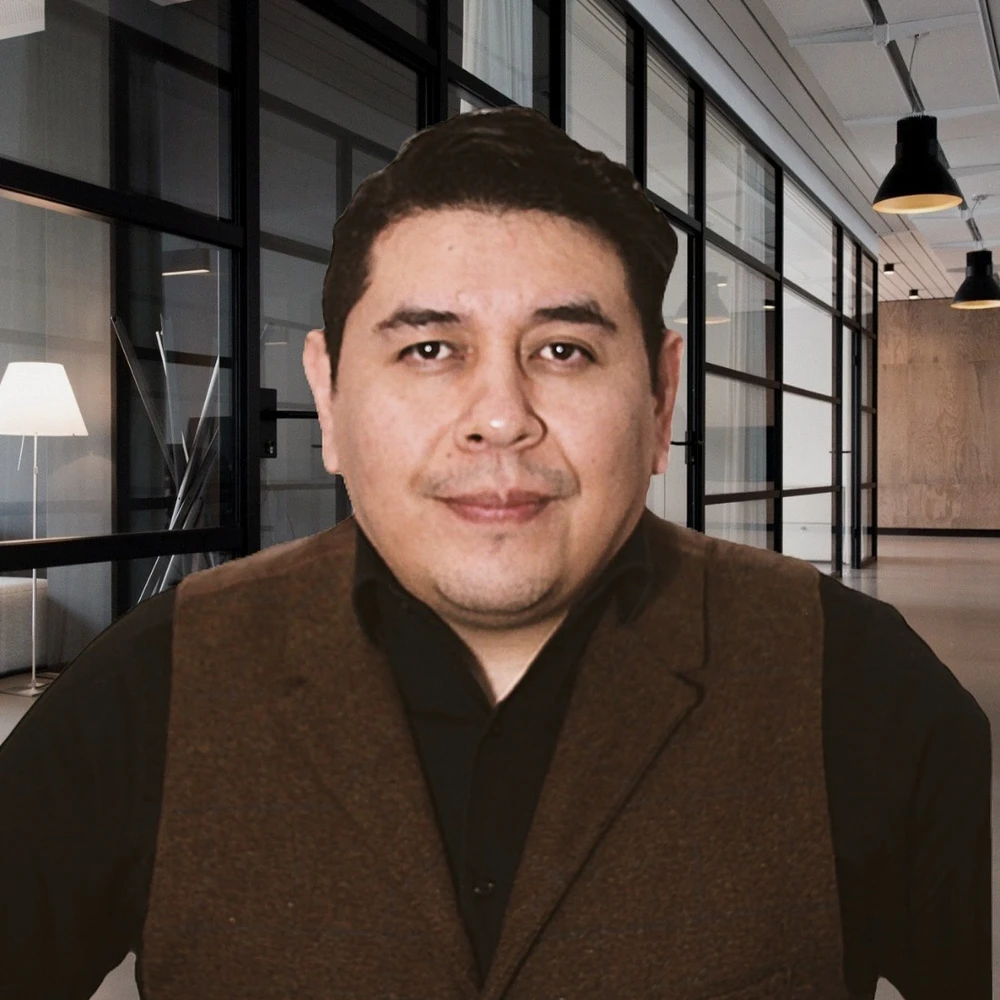

When I entered the university in 1998 to study graphic design, many of my classmates seemed to have a very clear path ahead of them. Some came from families connected to the printing business. Others imagined themselves working in print shops, producing screen prints, designing for clients, or perhaps opening a design agency where the final destination of the work was almost always ink on paper. At that time, at least from my perspective as a student, much of the imagination surrounding graphic design revolved around print.
I, on the other hand, did not have such a clear path.
I only knew that I wanted to learn. I wanted to find something within design that could connect directly with one of my deepest passions: music. I did not know how that would happen, or whether design could even bring me closer to it, but from the beginning I sensed that my relationship with graphic design would not be limited to print. There was something else there, even if I still did not know how to name it.
During my second semester, I took courses in visual composition. We began talking about rhythm, sequence, balance, allegory, contrast, and movement. Suddenly, everything made sense to me. Cutting geometric figures out of black cardstock and placing them onto illustration board did not feel like a simple school exercise. To me, it felt almost like composing music. There were silences, tensions, pauses, repetitions, visual beats. It was as if the image had its own cadence.
That was when I began to understand that my path within graphic design was closer to the arts, to time, to movement, and to sensory experience than to design understood only as a product for print.
Little by little, that intuition grew stronger. Then came photography, life drawing, color psychology, and later, experimental video. It was during that stage that I met Professor Ledezma, who taught us the basics of working with a professional video camera. We were a group of about twenty students, but only a few of us were truly interested in producing video. I remember that one classmate brought a camera that seemed more sophisticated than the professor’s and showed us different lenses and optical possibilities. That day I understood that the camera was not just a device for recording images. It was an extension of one’s way of seeing.
Soon after, Professor Ledezma asked us to develop a script for a short film. He invited us to work in teams, but he also warned us about something important: the university did not have enough equipment for all of us to edit our own projects. Instead, the footage had to be taken to a communications area at the university, where a team of people would deliver the edited video. For that reason, he insisted that we develop a very detailed technical script, including all the necessary notes so that the project could be finished according to our vision.

I began the project with two of my best friends. However, I soon realized that they were not as interested in producing as I was. So, almost without thinking about it, I took charge. I wanted to give it my best. I wrote the script, developed the storyboard, imagined the characters, found people who could act, and organized the shoot between classes.
The short film was titled Regresión. It was about a young man living in an abandoned building, a person who had fallen into a state of homelessness and who reflected a harsh reality related to substance abuse in the city. Many people talked about that issue, but I did not want to approach it in a literal way. I wanted to create something more dreamlike, more surreal, using handmade effects rather than the digital effects that were beginning to circulate at the time.
In the story, the main character experiences regressions in which he relives moments of happiness: family, friends, and the love of his life. But the film also reveals how a tragedy led him into addiction and emotional collapse.
Part of that sensitivity came from personal experience. For several years I had served in church, and part of that work involved visiting nursing homes, the CERESO in Ciudad Juárez, and rehabilitation centers for alcohol and drug addiction. Many of the people I met in those places spoke about the loss of love as a central wound: the love of a partner, unrequited love, the love of parents, the love of children, or the love of people who had disappeared from their lives. In Regresión, I wanted to reflect something from those stories.
When some of them described the experience of being under the influence of drugs, they spoke of it almost as a convulsion of illusions: overlapping dreams, distorted memories, images transformed by the mind. That was what I wanted to bring into the video.
I took that class in 1999, before seeing films like Requiem for a Dream or encountering the visual experimentation of Gaspar Noé’s cinema. However, part of the visual energy I had in mind was influenced by Tom Tykwer’s Run Lola Run. So, when I saw those other films years later, I could not help but think about that early attempt to translate memory, pain, and mental fragmentation into moving images.

After Professor Ledezma reviewed the project, he asked me to simplify the idea a bit. I followed his advice, and once he approved it, we began shooting. Since the university camera had to be shared among several students, we had to make the most of every moment with it. But that process made something very clear to me: producing video had become almost obsessive. I needed a camera. Or at least I needed to find someone who could lend me one.
Fortunately, one of my cousins had a camera. While the professor’s camera was a Sony Betamovie, my cousin had an old VHS camera from the 1980s, something similar to a JVC VideoMovie GR-303 HQ VHS-C camcorder. With that camera, I began shooting, even on days when my friends were not available. I felt that every shot mattered.
I also began experimenting with visual effects in a very handmade way. Some effects were created with magnifying glasses held directly toward the sun, using backlight to create flares, halos, and distortions in the camera. Others came from connecting the camera to a television and pointing the camera directly at the screen, recording that infinite image loop that appears when the image feeds back into itself. I also used a fish tank, dropping colored inks into the water to create high-contrast clouds and abstract textures. I filmed characters through the tank so that their bodies and faces appeared distorted by water and ink. I even used glass knobs from furniture, the kind shaped like diamonds or beveled crystals, placing them in front of the lens to fragment faces into optical patterns. These were not sophisticated effects. They were practical, improvised, and made with what I had around me. But for me, they opened a world.
I finished everything that was necessary to take the material to editing. When I delivered the footage to the communications area, the person in charge looked at the idea and told me to come back in two days. Those two days became five, and the deadline for the final presentation was getting very close.
But then something painful happened. Professor Ledezma had been sick with cancer, and none of us knew. He passed away before the semester ended and before we could present the projects. When I finally received the edited material, I already knew that he would not see it. That saddened me because he was truly passionate about production. He told us wonderful stories about his time as a news correspondent and how those experiences helped him produce other genres. For him, the camera was a deeply personal instrument. It was almost like becoming one with what you saw. Capturing what you see, he would tell us, is something passionate.
But another disappointment was waiting for me.
When I played the edited video, I found an overwhelming saturation of effects: fades, geometric shapes, star-shaped dissolves, triangles, circles. It was a visual mess. And the music, instead of supporting the story, overpowered the dialogue until the voices were almost inaudible. The person who edited it had used the demo options in Vegas, the editing software, and the result was far from the original idea.
I felt deeply disappointed. All the work, all the planning, all the visual and narrative intention had been pushed aside because I did not have access to the equipment or control over the editing. In the middle of that sadness, I thought something that perhaps gave me a little comfort: at least Professor Ledezma would not see it like this.
The following semester, I took a course in semiotics of the image. The final project was also an experimental video. I decided to return to the original idea. My cousin, the same one who had lent me the camera, told me that he had Vegas. I asked him to teach me how to use it, and he invited me to his house so I could learn as I went. He was ten years older than me, already married, and had children. Editing, of course, is not something you finish in one afternoon, but I had to complete the project in record time so his family could sleep.
In the end, my cousin told me, “Don’t worry. I’ll finish it tomorrow and give it to you so you can present it at school.”
What did my cousin do?
He gave me, once again, a video edited with the demo version of Vegas.
This time, there was no other option. I had to present it that way. Professor Rutilio García saw it and opened a discussion from the perspective of the rhetoric of the image. Let’s say it went well. But I was left with a strange feeling: something like a “good job,” but not the project I had imagined.
After those experiences, I became determined to learn editing no matter what.
Around that time, I met Liz, and we began dating. She was studying in the School of Communication and was taking courses in scriptwriting, television production, and radio. Since our campuses were relatively close, I would go to her university during my free time, and she would invite me to her classes. In the television workshop at UACH, I felt a powerful attraction to audiovisual production.
One day in particular, she was taking a course in audiovisual design. They were using PowerPoint to design TV bumpers and transitions. Liz had an idea for a visual effect that was almost impossible to achieve with that software in 1999. I, on the other hand, was learning Flash, and animation, motion, and visual effects fascinated me. I offered to help her and, in the process, showed her friends other software options.
That was when I understood something important: communication needed design, and design needed communication. Both fields had gaps, but they also had powerful areas of connection. It was almost as if the two disciplines were shouting at each other: “Hey, we are related!”
Over time, I have heard many people say that working with your partner is complicated, even unnatural. Some avoid it because they imagine that personal life and professional life must remain completely separate. But in our case, Liz and I have been making projects together since we met in 1999. What began as a shared curiosity about design, communication, television, scriptwriting, radio, and audiovisual production became a way of life. By 2026, we are still moving forward: learning, collaborating, discussing ideas, imagining projects, and accompanying each other through every stage. Our creative history has never been a pause within our relationship. It has been one of the most constant ways of building it.
That was when I saw my path more clearly. My future was not in print, nor in screen printing, nor in design understood only as a static graphic piece. My path was audiovisual production. Audiovisual design. What I would later name more precisely as motion graphics.
I began asking at my university about that possibility. I was told that there were no professors focused on that area and that, with animation courses, I could do almost the same thing. And yes, to a certain extent, that was true. But I sensed that there was a clear difference between animation and audiovisual design applied to television, video, moving visual identity, and media production. Saul Bass was already an international reference in that field, but in my design program, that connection was not clearly recognized.
So I began to research on my own.
In 1999, I got my first Macintosh: an iMac G3. I also got a Sony Handycam. Around the year 2000, I began collecting magazines such as a! Diseño, Lúdica, and Matiz. Those magazines shaped my career as a designer because they helped me understand that design could go far beyond conventional limits.
Matiz, for example, had a very experimental editorial design. Sometimes it forced the reader to rotate the magazine in order to continue reading, following spiral patterns or unconventional text structures. With an engaging topic, it was impossible not to feel drawn into that form of reading. Lúdica explored the history of design, Japanese design, the influence of art, and many other connections. a! Diseño, on the other hand, was always at the forefront. It interviewed international figures in design, but also designers from Mexico. In some way, that helped me realize that the discipline had respect and, more importantly, a future in my country.
Issue number 51 of a! Diseño gave me the arguments I needed to devote myself more seriously to motion graphics. It presented video and motion graphics as a fertile field for designers. It discussed large-format advertising screens from the late 1990s, especially in places like Times Square, and offered an idea that stayed with me: Mexico had to adapt.
I took that idea seriously.
Looking back, I also realize that I was studying design at a moment of transition. The technological advances of the early 2000s gave the discipline a major turn. Graphic design was no longer only about print, logos, posters, catalogs, or editorial work. It was beginning to enter the fields of multimedia, web design, digital interfaces, video, and motion graphics with much more force. My university embraced that transformation with great emphasis. The new computer labs, the Apple equipment, and the growing attention to digital media created a context that gave me the foundations I needed to move toward audiovisual production.
Although I postponed the completion of my degree because I was constantly combining school with real-world experience, that delay also allowed me to experience the evolution of the curriculum from the inside. I was able to take advantage of a program that still had roots in the 1992–1997 curriculum, then moved through the 2001–2005 plan, and later into the 2005–2010 vision. In other words, I did not experience my education as a fixed route. I experienced it as a field in motion. That gave me a broader perspective on design, and it helped me understand that motion graphics were not outside the discipline. They were part of where the discipline was going.
In 2005, with the help of my parents, I was able to buy a Power Mac G5. With the money I earned from design work and social-event videos, I bought Final Cut Express and later the full license for Final Cut Pro. Looking back, I had learned to edit in a very analog way, connecting VHS tapes in a chain, experimenting with analog switchers, and trying to understand how images could be assembled through cables, decks, and timing. Moving into digital video changed everything.
FireWire, MiniDV cameras, and nonlinear editing opened a completely different workflow. Over time, I was able to acquire more equipment. I worked with cameras such as the Canon XL1 and GL2, then moved toward the Panasonic AG-DVX100, and later incorporated DSLR cameras such as the Canon 5D Mark II and 7D into my work. I also adopted some of the first drones, the first GoPro models, and eventually witnessed how many things that once required heavy equipment could be done with an iPhone.
That technological journey taught me that video production is never only about the tools. Each new technology changes the way we imagine, plan, shoot, edit, and distribute images. It changes the rhythm of work, the size of the crew, the aesthetics of the image, and even the kinds of stories that become possible. But technology does not replace vision. A camera, an editing system, a drone, a phone, or even an AI tool only becomes meaningful when someone knows what they want to communicate and why.
Today, I see artificial intelligence as part of that longer history of technological shifts. Just as digital editing, MiniDV, DSLR cameras, drones, and smartphones transformed audiovisual production, AI is now changing how we generate ideas, organize material, visualize concepts, edit, and teach media production. But for me, the essential question remains the same: how do we use new tools with intention, ethics, and creative responsibility? This is also why teaching became so important to me. Students do not only need access to technology. They need to learn how to think critically with it, how to make choices, how to understand audiences, and how to transform a tool into a meaningful act of communication.
I reviewed university programs in Mexico and noticed that only a few were beginning to integrate courses related to video, film, and audiovisual design. I also realized that my own design program already contained several elements of that field, but they were scattered.
The problem was that, in the imagination of many students, the final destination of the degree was still the print shop.
Around 2002, I could have kept that knowledge to myself and used it as an advantage. Instead, I wanted to share it. I contacted Arte 7, a film school in Mexico City. They invited me to take an online exam to enter the film program. I took it and was accepted. But the reality was that I could not move to Mexico City without first finishing my degree in design.
So I did something else: I took all the information I had gathered and used it to design a course.
I presented it to the director of the institute, Maestra Galicia, who received the idea with enthusiasm. At that time, the university was beginning to make a major investment in computer equipment. The small lab that had previously been located in the engineering building was being moved to a completely new space. By 2002, the three-story computer building would have rooms dedicated to Apple equipment.
Maestra Galicia told me about the project and said something I never forgot: “You came at just the right time. Tell me what we need to do what you have already been doing.”
I gave her a list of requirements: computer specifications, video cards, video cameras, and audio equipment. Over time, I learned that Dr. Gloria Rodríguez had also insisted on the need to acquire equipment for video production. As one of the pioneers of the design program and later of digital design in interactive media, she also saw that transformation coming.
But I believe that when a university leader receives that kind of concern from a student, the narrative changes. It is no longer only an administrative or academic need. It becomes the student saying, “Look at where everything is going. It would be great if all students had access to this knowledge.”
I was fortunate. My parents were not wealthy, but they did what they could to support me. The investments came little by little: first the computer, then the camera, then accessories. There were birthdays and Christmases when I received MiniDV tapes, cables, or headphones as gifts. To me, that was huge.
I think Maestra Galicia saw something generous in my desire to share what I was learning. A few days later, she told me that several professors were motivated to learn about digital editing and wanted to know more about my plan. However, because of certain professional tensions, I was ultimately unable to teach the course to the faculty. I was told that some people did not think it was appropriate for a student to teach professors.
Even so, around 2003, Maestra Galicia invited me to look at the new computer labs. I remember her telling me, “Look, much of this is because of you.”
I have always kept that moment as something very personal. In fact, I usually only tell that story to close friends. It was very special to me because I honestly was not looking for credit. I was not even thinking about becoming a university teacher at that point. But every time Maestra Galicia saw me, she would insist: “Finish your degree already so you can come work with us.”

In 2002, I began recording social-event videos, and the first ideas for Luz Verde TV began to appear. Eventually, we had a demo air on Canal 44. It was an austere version, almost like a school project, closer to student experimentation than to a formal television production. Between 2002 and 2003, Liz and I began collecting interviews and a great deal of material. It was a stage of learning together.
By 2004, we gave ourselves an ultimatum: we could not let 2005 pass without going on air.
That decision changed many things. Luz Verde TV began as an independent production, made with limited resources but with enormous creative freedom. We were not responding to a traditional television formula or to a structure imposed from above. It was us thinking, writing, recording, editing, solving problems, and proposing ideas with whatever we had at hand.

By 2006, Luz Verde TV had achieved a much wider reach through the signal of Multimedios Televisión, reaching audiences in Mexico and the United States. That was very significant for us because we remained an independent production, but now we had binational visibility. From Ciudad Juárez, we were producing content that crossed the border and connected with audiences on both sides. That creative freedom was essential. It allowed us to experiment with formats, interviews, music, local culture, urban art, and audiovisual proposals that would have been difficult to place within more conventional television.
Meanwhile, I was still postponing my university degree. Not because I had completely abandoned school, but because I was moving slowly, taking one or two courses while learning in the real world. By 2004, I had started my own design business. I had created large-format advertising for billboards in the city, and among my clients was one of the most traditional shoe stores in the region. For them, I developed many advertising and communication materials, including a catalog that was one of the owner’s most ambitious projects.
By 2005, we also founded Essael Josman, our first more formal attempt to give shape to the kind of design, video, and media production work we were already doing. However, we eventually felt that the name and concept needed more strength, more identity, and a clearer connection to the audiovisual direction we were pursuing. In 2007, we founded Blackbird Studio, which later became Blackbird Media as our work expanded beyond studio-based production into broader communication, advertising, and multimedia projects.
Around that same time, I began my journey with Cinema 4D. That opened another door for me. Until then, much of my work had moved between video production, editing, graphic design, and motion graphics, but 3D animation gave me a new way to think about space, movement, depth, light, and visual rhythm. It was no longer only about placing images in sequence; it was about constructing environments, objects, camera movements, and animated compositions from the ground up.
One of my first commercial projects using Cinema 4D was a Christmas advertisement for my client Axtel. I remember that project as an important step because it allowed me to apply 3D animation to a real advertising need. It was not just an exercise or an experiment anymore. It was a professional assignment, with a client, a message, a deadline, and an audience. That experience helped me understand how motion graphics, 3D animation, branding, and commercial storytelling could work together.
Cinema 4D became part of my creative vocabulary. It expanded what I could offer to clients and also changed the way I imagined audiovisual design. I could now think beyond the camera and beyond the flat screen. I could create movement in virtual space, animate objects, build atmospheres, and connect design with cinematic language in a more complex way.
By 2011, that evolution led us to Latte Films, a name that reflected a more mature stage in our creative and professional journey.
Looking back, each name represented a different moment in our growth. Essael Josman belonged to the early stage of experimentation and entrepreneurship. Blackbird Studio and Blackbird Media reflected the moment when we began to understand ourselves more clearly as audiovisual producers and media creators. Latte Films emerged when our work had become more connected to storytelling, commercial production, documentary sensibilities, and strategic communication. None of these transitions happened overnight. They were part of a long process of learning how to name what we were becoming.
At that time, teaching did not resonate with me. I wanted to produce, design, record, edit, solve real problems for clients, and build projects. But something interesting was already happening: I was teaching informally all the time. I taught friends and acquaintances how to edit video, use software, think through visual strategies, and understand production techniques. Suddenly, several of the people who collaborated with me ended up starting their own video businesses.
Honestly, that never bothered me. On the contrary, I saw it as a blessing and an opportunity. Every time someone learned something with me, I felt the need to learn even more.
Then came Luz Verde TV, and there I poured everything I knew, as well as everything I was still learning. I dedicated myself to it to the point of changing my circadian rhythm. I stopped eating well, stopped resting, stopped sleeping. I got sick and continued working anyway. I could keep producing even while dealing with pneumonia or gastritis. At the time, I did not see it clearly, but my obsession with producing was affecting me.
Over the years, I slowed down a little. I focused more on producing commercials and developing marketing and advertising strategies. But there was still something pending: finishing my degree.
Liz, whom I married in 2009, encouraged me to complete it. She had finished her degree in 2002 and, shortly after, became a professor of graphic design. Her example and encouragement were important in helping me close that academic chapter.
Around 2010, things became difficult in Ciudad Juárez. The wave of violence affected the lives of many people, and I experienced its consequences indirectly. That situation led me to relocate first to Mexico City and later to Monterrey in 2011. We lived there for a while, I completed some projects, and by 2013 we returned to Ciudad Juárez so I could begin my master’s degree.
That was when teaching began to appear more strongly.
A friend invited me to teach production courses with the team of a civil association. I felt deeply motivated to share everything I had learned through years of practice, trial and error, obsession, collaboration, and improvisation. People who knew me also began inviting me to teach production, audiovisual design, and advertising strategies.
That was my initial stage in pedagogy. It did not arrive as a completely planned decision, but rather as a natural consequence of my story. I had spent years learning in order to overcome my own limitations: lack of equipment, lack of access, lack of specialized courses, and the absence of a clear path within my program. But without realizing it, every time I learned something, I also wanted to share it.
So when I was finally invited to teach at the university, I accepted immediately.
In the end, I do not believe this path happened by chance. It was not coincidence, but continuity. Video and multimedia were not scattered interests in my academic and professional life; they were turning points. They gave me the language, discipline, and imagination to move between design, communication, film production, scriptwriting, screenwriting, and technical communication. Later, my Ph.D. in Rhetoric and Composition helped me understand the deeper framework behind that journey. What I had practiced for years through cameras, screens, scripts, interfaces, and audiences could now be understood through rhetoric: purpose, genre, multimodality, ethics, persuasion, and meaning-making.
Looking back, I understand that my life has always been shaped by two forces: learning and sharing. First, I wanted to learn in order to produce. Then I wanted to produce in order to communicate. And eventually, I understood that teaching is also a form of production: producing possibilities, producing paths, producing confidence in others.
That path was not solitary either. Liz was there from the beginning, not as a secondary companion in the story, but as a creative accomplice. From those first conversations between design and communication, from the classes she invited me to attend, from television projects, scripts, interviews, ideas discussed at home, and decisions we made together, our professional life and personal life became intertwined. Many people separate those worlds because they fear that one will contaminate the other. In our case, that mixture gave us direction. It taught us that creating can also be a way of caring, dialoguing, insisting, and remaining.

My path did not begin in the classroom. It began with a borrowed camera, a family computer, design magazines, software learned along the way, sleepless nights, failed projects, badly edited videos, analog switchers, VHS decks, FireWire cables, MiniDV tapes, cameras, Cinema 4D experiments, clients, friends, a complex city, a life partner, and a deep need to find a relationship between image, sound, music, and human experience.
Teaching came later, but it did not come from nowhere.
It arrived because, from the beginning, every discovery I made became something I wanted to turn into an invitation for someone else.


Comments